
White Chocolate Biscoff Cookies made with buttery cookie dough, both Biscoff butter and cookies & white chocolate for a truly unforgettable cookie!
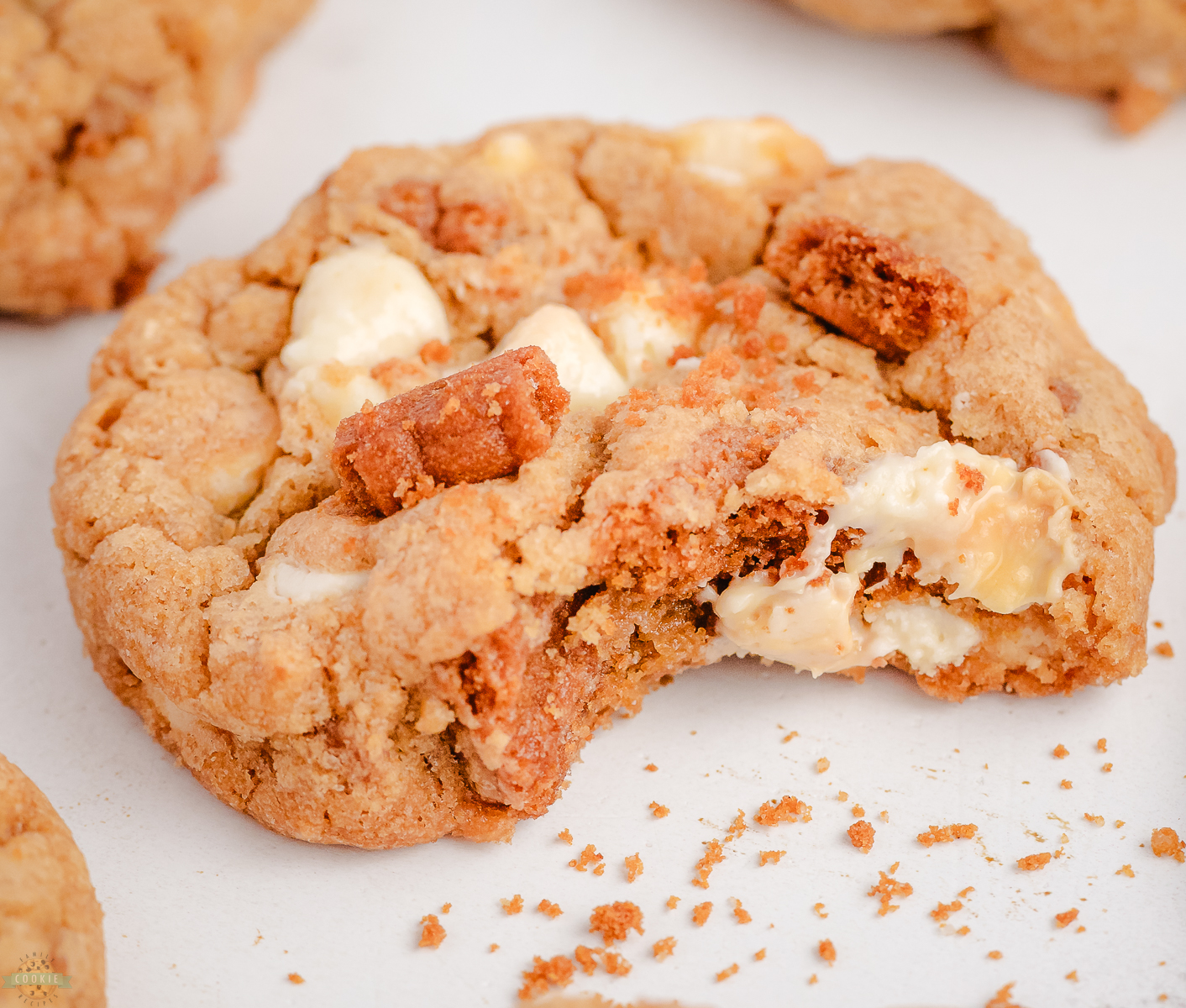
These Biscoff Spread Cookies aren’t your average cookie—they’re packed with deep caramelized cookie butter flavor in every bite, thanks to both Biscoff spread and chunks of real Biscoff cookies. Melted white chocolate takes them over the top, balancing the warm spice with creamy sweetness and making every bite soft, rich, and unforgettable.
What is Biscoff?
Biscoff spread (also called cookie butter) is made from crushed Lotus Biscoff cookies blended into a smooth, spreadable paste — think peanut butter but made entirely from spiced caramelized cookies. It’s usually found in the peanut butter aisle or near the Nutella.
Ingredients for Biscoff Chocolate Chip Cookies
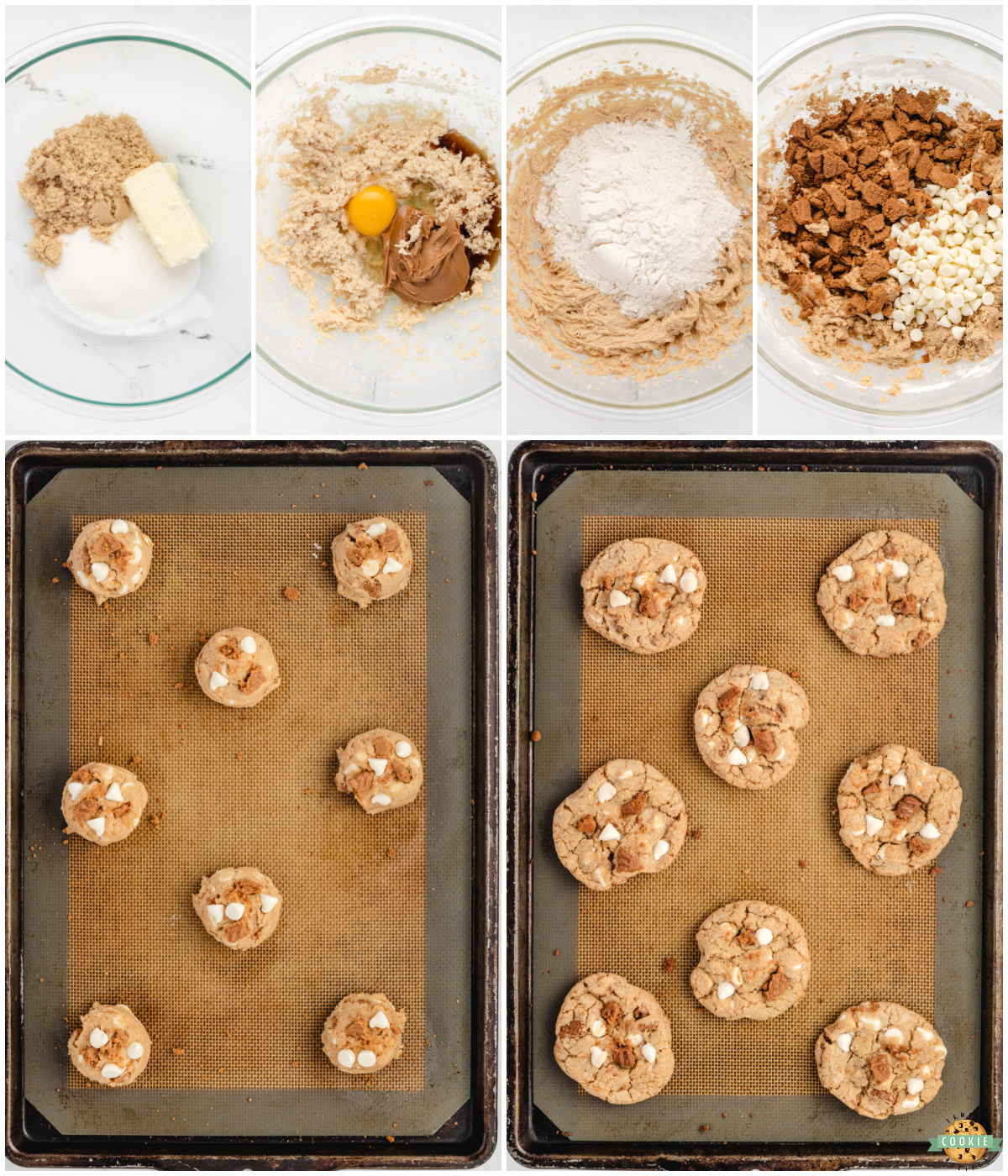
Butter (½ cup): Provides richness, flavor, and a soft, tender texture while helping create a creamy base when beaten with the sugars.
Brown sugar (½ cup) & granulated sugar (½ cup): Work together to sweeten the cookies, with brown sugar adding moisture and caramel depth while granulated sugar helps with structure and slight crispness.
Biscoff Spread (⅓ cup) & Biscoff Cookies (8 cookies): Deliver the signature spiced caramel cookie butter flavor, with the spread blending into the dough for richness and the cookie pieces adding texture and bursts of crunch.
Egg (1) & vanilla extract (1 tsp): The egg binds the dough and adds structure, while vanilla enhances and rounds out the warm, sweet flavors.
All-Purpose Flour (1 ½ cups) & baking soda (½ tsp): Flour forms the cookie’s structure, and baking soda provides a light lift and slight spread for a soft, bakery-style texture.
White Chocolate Chips (1 cup): Add creamy sweetness and smooth pockets of melted chocolate that balance the spiced Biscoff flavor.
Tips for making Biscoff Cookies
Full instructions in the recipe card below, but here are some tips for making these delicious treats!
- Don’t skip the chill time (and don’t rush it): The Biscoff spread softens the dough quickly, so chilling is what prevents overspreading and keeps the cookies thick, bakery-style, and packed with texture.
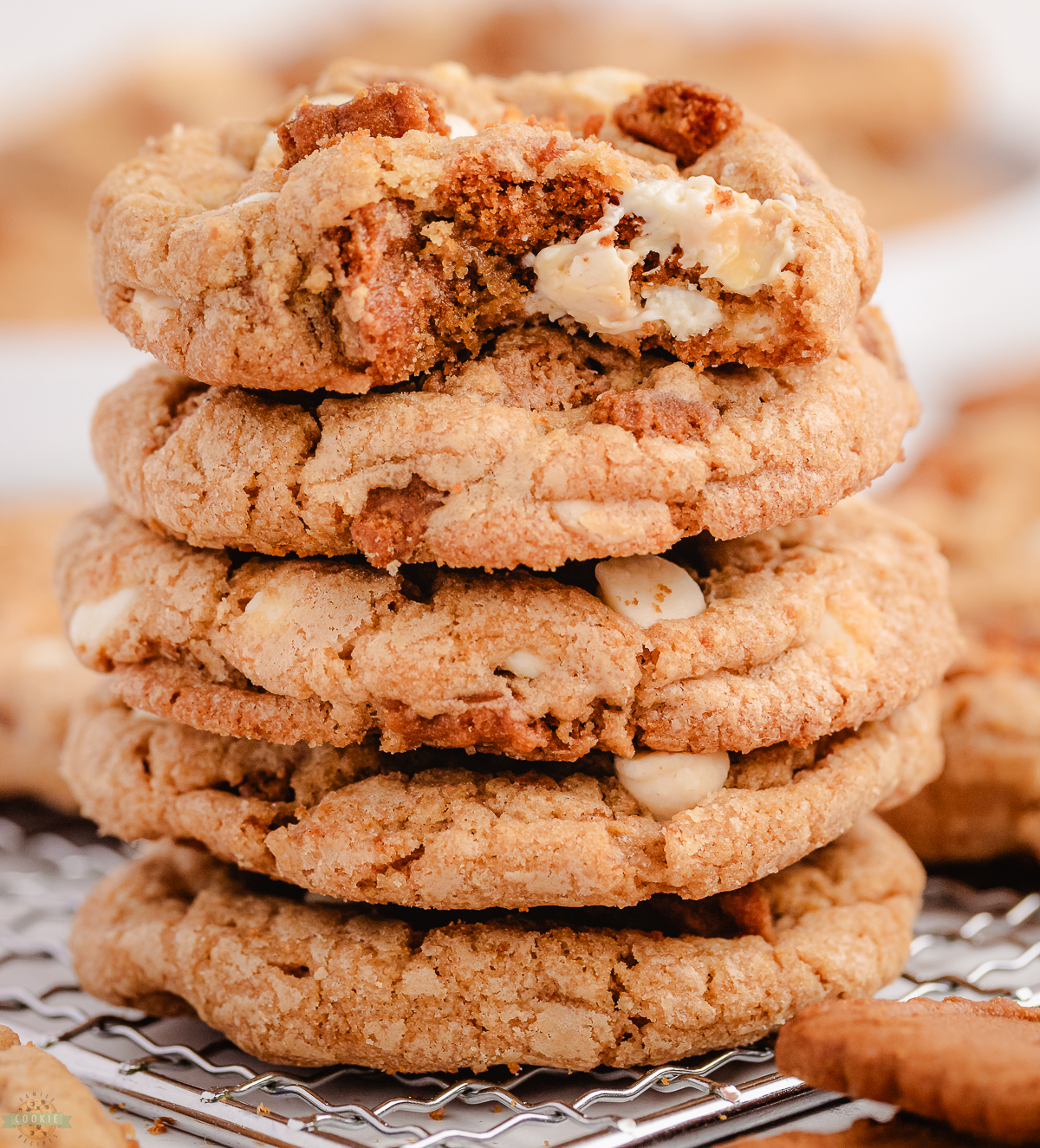
- Use chopped Biscoff cookies in two textures: Mix some finely broken pieces into the dough for even distribution, but save larger chunks for topping so you get those signature crunchy caramelized bites on the surface after baking.
- Slightly underbake for the best texture: Pull the cookies when the edges are just lightly golden—even if the centers look soft—because they’ll finish setting on the baking sheet and stay chewy instead of drying out.
- Press toppings in before baking: Gently pressing extra white chocolate chips and Biscoff pieces onto each dough ball before it goes in the oven ensures they stay visible, caramelize slightly on top, and give that bakery-style finish.
Making Dough Ahead, Storage & Freezing
Yes, the dough can be made up to 48 hours in advance and kept chilled in the refrigerator; in fact, longer chilling can deepen the Biscoff flavor and improve the texture.
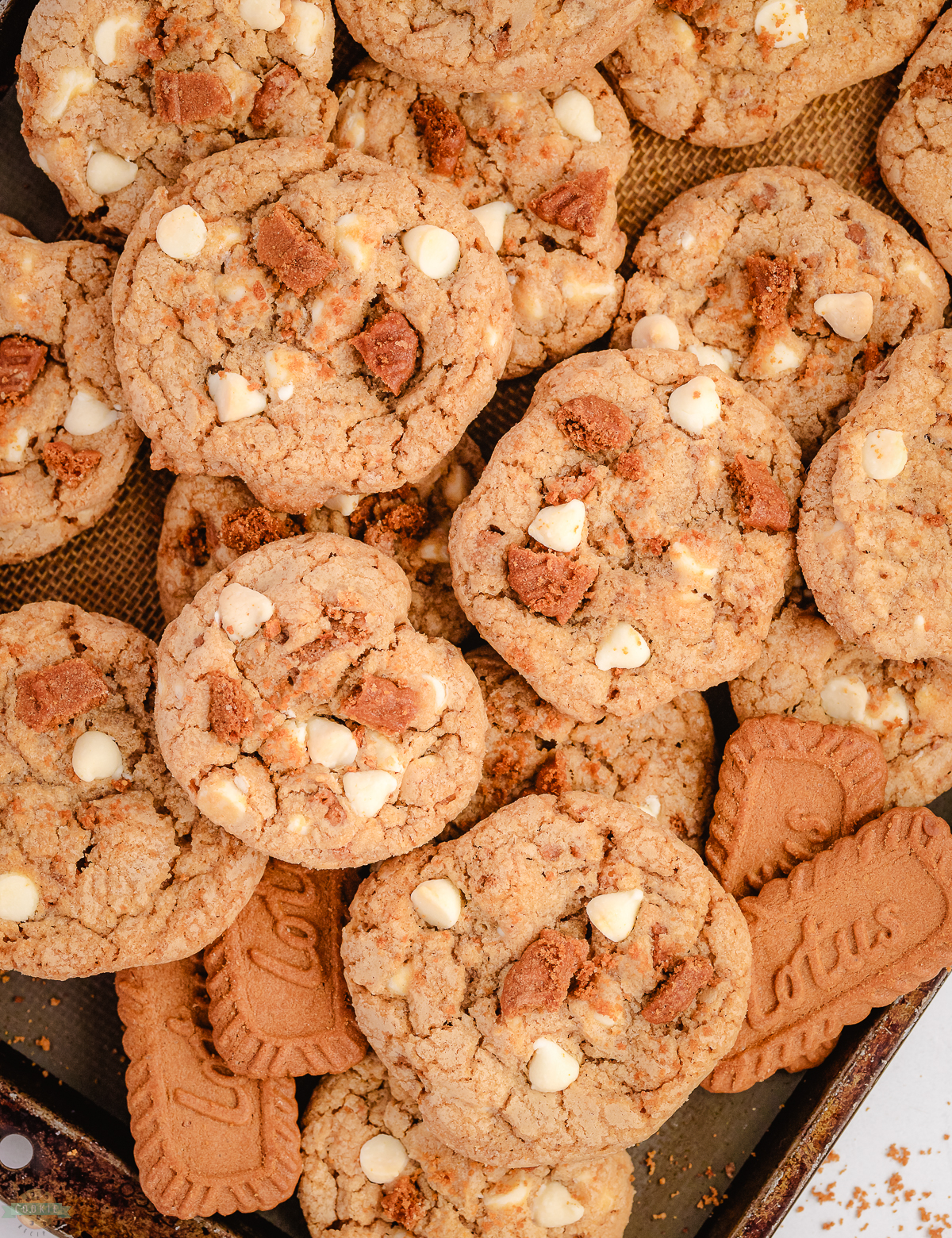
These Biscoff Cookies stay fresh for about 4–5 days at room temperature when stored in an airtight container, and they actually stay soft and flavorful thanks to the brown sugar and Biscoff spread.
Yes, they freeze really well—either freeze the baked cookies for up to 2–3 months, or freeze the cookie dough balls (before baking) so you can bake fresh cookies anytime. For best results, flash-freeze the dough balls first, then store them in a freezer bag and bake straight from frozen, just adding an extra 1–2 minutes to the bake time.
Why Did My Biscoff Cookies Come Out Wrong?
Biscoff spread adds incredible flavor but it also makes the dough softer and more temperature-sensitive than a standard cookie dough. Here’s how to fix the most common problems:
My cookies spread completely flat. This is the most common issue with Biscoff cookies and almost always comes down to dough that wasn’t cold enough when it went into the oven. The Biscoff spread softens the dough significantly, so unlike a standard chocolate chip cookie where chilling is optional, here it’s essential. Make sure the dough is fully chilled for the recommended time, and if your kitchen is warm, keep the remaining dough in the refrigerator between batches. Also check that your butter was room temperature — soft and cool to the touch — not warm or starting to look shiny and melted.
My cookies came out too hard. Almost certainly overbaked. The caramel color of Biscoff dough makes it genuinely difficult to judge doneness by eye — the cookies look done before they actually are, which tricks bakers into leaving them in too long. Pull them when the edges are just set and lightly golden but the centers still look underdone and slightly glossy. They’ll finish setting on the hot baking sheet and turn perfectly chewy as they cool. If in doubt, err on the side of underbaking — you can always add a minute, but you can’t take it back.
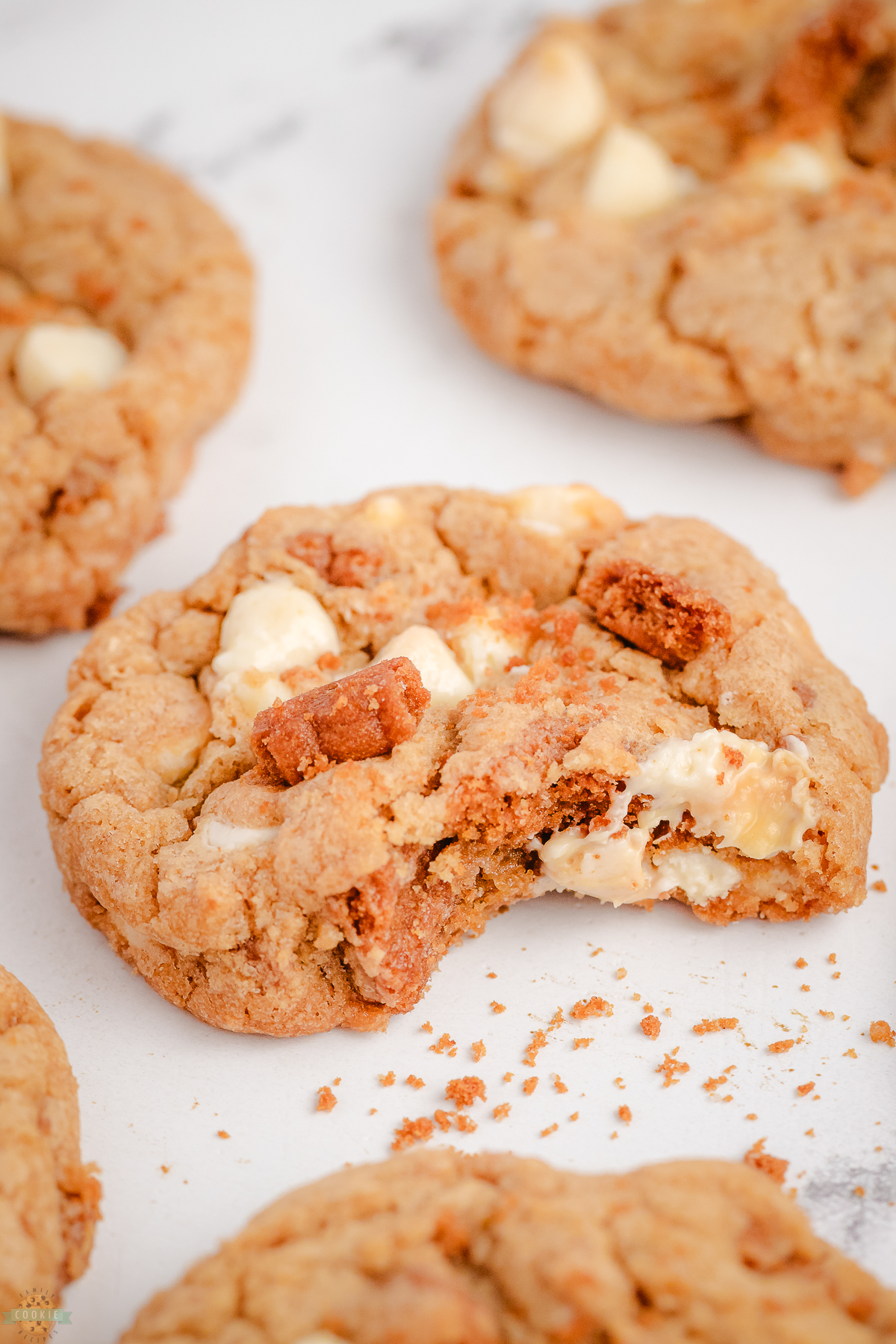
My white chocolate chips turned brown or burned. White chocolate has a lower burn point than milk or dark chocolate and caramelizes quickly in a hot oven, especially when pressed onto the surface of the cookie where it’s exposed to direct heat. If this is happening, try pressing the white chocolate chips onto the cookies immediately after they come out of the oven rather than before they go in — the residual heat from the warm cookie will melt them just enough to set in place without burning. Alternatively, add them in the last 2 minutes of baking only.
The Biscoff flavor isn’t coming through strongly enough. A few things can mute the Biscoff flavor — not enough chill time (longer chilling actually deepens and concentrates the flavor), using a brand of cookie butter that isn’t Lotus Biscoff spread, or simply needing more contrast. The easiest fix after baking is to drizzle melted Biscoff spread over the cooled cookies — just microwave a few tablespoons of spread for 20-30 seconds until pourable and drizzle over the top. It adds a strong hit of cookie butter flavor and looks bakery-beautiful at the same time.
My dough was too sticky to scoop. Completely normal with Biscoff spread in the dough — it makes the dough significantly stickier than a standard recipe. The fix is simple: make sure the dough is fully chilled before scooping, use a cookie scoop rather than trying to roll by hand, and dip the scoop in warm water between cookies. If the dough is still unmanageable, another 30 minutes in the refrigerator will firm it up considerably.
My Biscoff cookie pieces sank into the dough and disappeared. If the chunks aren’t visible on the finished cookie, they were either too small or added too early. Keep some larger pieces reserved specifically for pressing onto the top of each dough ball right before baking — this guarantees visible chunks on the surface that caramelize slightly in the oven and give that bakery-style finish. The pieces mixed into the dough will provide flavor and texture throughout, while the surface pieces are what make the cookies look irresistible.
Can I use crunchy Biscoff spread instead of creamy?
Absolutely! Crunchy Biscoff spread works well and adds extra texture, but it may make the dough slightly thicker, so be sure not to overmix.
Why did my cookies spread too much?
This usually happens if the dough wasn’t chilled long enough or if the butter was too soft, so make sure the full chill time is followed for thick, bakery-style cookies.
Try more of our White Chocolate & Biscoff cookie recipes here:
- Biscoff Butter Cookies are rich, chewy, and loaded with warm cookie butter flavor in every bite. They strike the perfect balance of sweet, salty, and caramelized crunch!
- These Cranberry White Chocolate Cookies are perfectly balanced with sweet white chocolate chips and tart dried cranberries. Crowd-pleasing cookie that tastes like a holiday favorite any time of year.
- Take the classic chocolate chip cookie and make it next-level with these Biscoff Chocolate Chip Cookies. They’re an easy upgrade that delivers deep caramel flavor and serious cookie comfort.
- Bursting with bright citrus flavor in every bite these White Chocolate Chip Lemon Cookies are so tasty. The lemon pudding mix adds extra zest and tenderness making them unforgettable!
- Raspberry White Chocolate Cookies are soft & buttery with crisp edges and a melt-in-your-mouth center, they’re the perfect balance of rich, fruity, and totally irresistible.
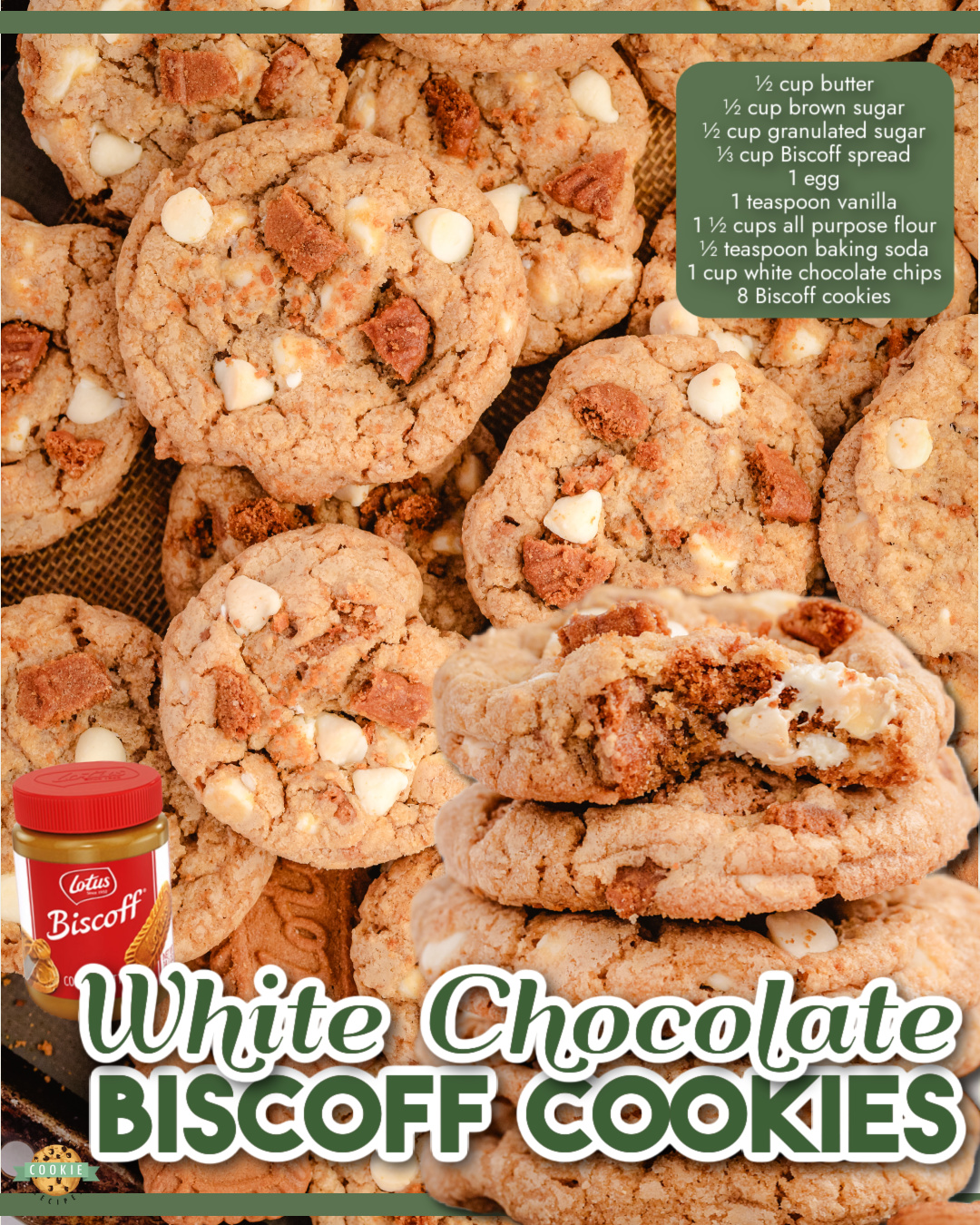
These White Chocolate Biscoff Cookies are soft, buttery, and loaded with double the cookie butter flavor—Biscoff spread and chunks of Biscoff cookies in every bite. Add creamy white chocolate and you’ve got a rich, bakery-style cookie that’s impossible to stop eating.







Leave a Reply